Impact Printers vs Non Impact Printers: Understanding the Difference

What are Impact Printers?
When it comes to printing technology, there are two main categories: impact printers and non-impact printers. The main difference between these two types of printers lies in the way they produce printed images on paper. Impact printers use a physical mechanism to strike an ink ribbon against the paper, whereas non-impact printers use a non-mechanical method to produce printed images.
Impact printers were the first type of printer to be developed and were widely used in the early days of computing. They are known for their loud noise and relatively slow printing speed. However, they are still used today in certain applications such as printing receipts, tickets, and labels. On the other hand, non-impact printers are much quieter and faster than impact printers, making them a popular choice for personal and commercial use.
What are Non Impact Printers?
What are Impact Printers? Impact printers work by using a print head that strikes an ink ribbon against the paper to produce printed images. The print head is made up of a series of metal pins that are arranged in a matrix, and as the print head moves back and forth, the pins strike the ink ribbon against the paper to form characters and images. Impact printers are simple and inexpensive to maintain, but they are limited in their ability to produce high-quality images.
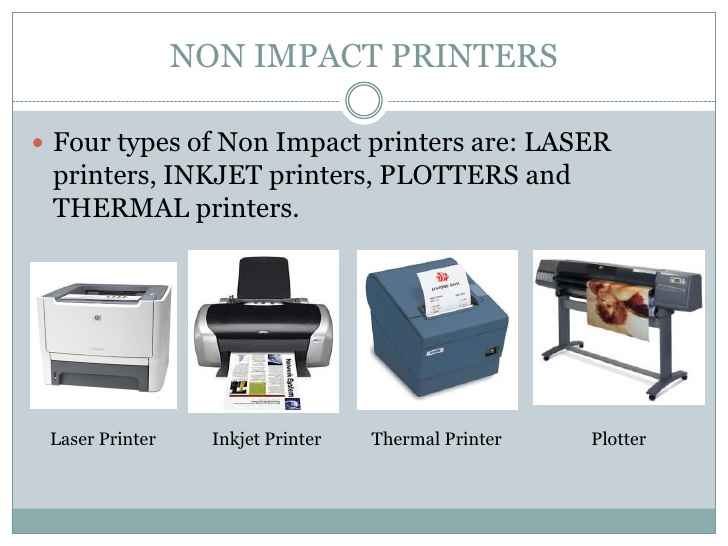
What are Non Impact Printers? Non-impact printers, on the other hand, use a non-mechanical method to produce printed images. They work by using a combination of heat, ink, and paper to produce printed images. Non-impact printers are much faster and quieter than impact printers, and they are capable of producing high-quality images with precise control over ink placement. Common types of non-impact printers include inkjet printers, laser printers, and thermal printers. They are widely used in personal and commercial applications, and are known for their high-quality output and reliability.